

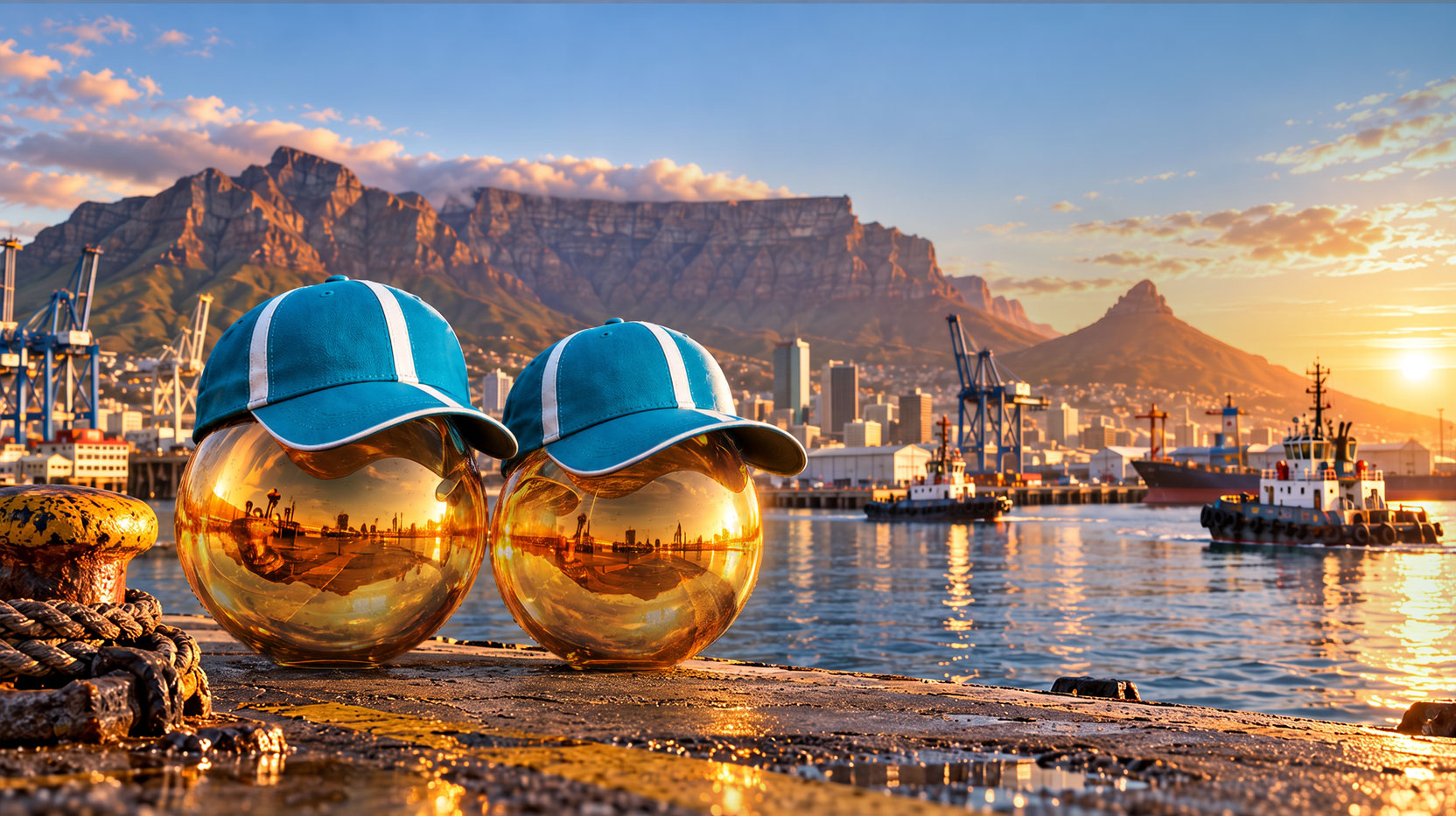
The Lube Guys establishes a local presence in Cape Town
Faster support and broader lubricant options are now closer to Western Cape businesses.
When a group of tugboats at the V&A Waterfront was left standing for several days, the problem was not mechanical. The vessels were ready to work, but the lubricant they required was unavailable.
Every additional day spent waiting meant more downtime.
The client contacted The Lube Guys, where Dylan located the required stock in Johannesburg and arranged for it to be delivered the following day. The vessels could return to operation.
It was a relatively straightforward intervention, but it illustrated a problem Dylan has encountered repeatedly since moving to Cape Town: businesses can have valuable machinery, capable maintenance teams and work waiting to be done, yet still be brought to a halt because the correct lubricant cannot be sourced when it is needed.
“Product availability is one of the clearest challenges I’ve seen, especially in the marine sector. A lot of the lubricants these businesses need are either out of stock or simply not available in South Africa.”
It is precisely the kind of problem The Lube Guys hopes to solve through its growing presence in Cape Town and the Western Cape.
Starting with a conversation
Dylan’s first Cape Town meeting was with a marine supplier he had contacted directly.
There was no long-standing local relationship to rely on and no familiar name waiting for him at the door. He was a 20-year-old who had recently arrived from Johannesburg, asking an established marine business to consider buying critical lubricants from a new supplier.
He was conscious of how that must have looked.
“I could see they were surprised. Here was a 20-year-old from Johannesburg trying to sell them oil for sea vessels.”
But the company gave him the opportunity to explain what The Lube Guys could offer.
For Dylan, the significance of the meeting went beyond the possibility of making a sale. It showed him something about the Western Cape market: businesses were willing to have a conversation, consider an alternative and give a new entrant an opportunity to demonstrate its value.
That openness has shaped his experience of Cape Town so far.
“People here have been genuinely kind, helpful and open. That has made a real difference in how quickly we’ve been able to start building relationships.”

Dylan Bezuidenhout
The Lube Guys, Cape Town
Why a local presence changes the relationship
The move to Cape Town was not made without an existing view of the market. Before relocating, Dylan was already speaking to businesses in the Western Cape, particularly marine chandlers, bunker companies and industrial operators. The Lube Guys was also receiving a steady flow of enquiries from the region.
Cape Town’s port and maritime economy presented an obvious opportunity. Beyond the harbour, however, the Western Cape also has a substantial agricultural base that includes wine farms and a broad range of farming operations.
Agriculture is a market The Lube Guys has not yet fully explored, giving the company room to build relationships in a sector where machinery reliability is fundamental to daily operations.
Being based locally makes those conversations easier, but Dylan believes the real advantage goes further than shorter travelling distances.
From Johannesburg, it is possible to answer a call, quote on a product and arrange a delivery. What is harder to do from a distance is see how a business operates, inspect the application and understand what is happening around the machinery.
“Being here, I can see what kinds of businesses operate in the region and how they actually work. Sitting down face to face and having a proper conversation also builds trust in a way a phone call never really can.”
That distinction matters in an industry where supplying the wrong product can have serious consequences.
Lubricants are sometimes treated as routine consumables: a container of oil or grease identified by a familiar name or specification. In practice, the correct choice depends on the equipment, the manufacturer’s requirements, the operating environment, service intervals and the demands placed on the machinery.
“We’re dealing with machinery that costs a great deal of money. Using the wrong specification of oil can damage a machine completely.”
A site visit allows him to understand the application first: what the machine does, the conditions in which it operates and which specifications must be met. He then looks at the products already being used across the operation, consumption volumes and servicing patterns.
The objective is not merely to replace one product with another. It is to help the customer select an appropriate solution, plan supply more effectively and, where possible, consolidate several lubricant requirements through one dependable supplier.
A choice of brands, not a predetermined answer
Many machines are approved to operate only with products meeting specific original equipment manufacturer requirements. A single business may own several types of machinery, each with different specifications.
This is where access to multiple international lubricant brands becomes particularly useful.
Instead of approaching every application with one predetermined product, The Lube Guys can identify several technically suitable options and help the customer compare them according to performance, availability and budget.
It also provides an alternative when a preferred brand is unavailable.
“If one major brand is out of stock, we can offer a proven alternative that meets the required specification instead of leaving the customer waiting.”
For a customer facing downtime, that flexibility can be far more valuable than loyalty to a particular label.
It also reflects how Dylan wants The Lube Guys to be understood in the Western Cape. The business supplies oil and grease, but the product is only one part of the relationship.
Customers also depend on responsiveness, technical care, honest communication and the confidence that their supplier understands what is at stake when a machine stops operating.
“You can get these products from many places. What sets a supplier apart is the people you’re dealing with and the way they do business.”
Building from the harbour outwards
The company’s earliest Cape Town conversations have centred primarily on the marine sector, with growing engagement among industrial and engineering businesses.
Maritime activity provides an immediate foundation, while agriculture represents one of the largest areas for future development. Transport and general industry are also part of the longer-term picture.
Over the coming year, Dylan’s focus will be on expanding the local client base, strengthening existing relationships and entering markets that The Lube Guys has not previously reached—particularly agriculture.
His longer-term ambition is for the company to become a recognised, dependable lubricant supplier throughout the Western Cape, supported by local stock and the ability to respond quickly when customers need assistance.
He is not expecting that reputation to come from simply announcing that the company is in Cape Town. It will need to be earned one visit, one delivery and one solved problem at a time.
That is why his invitation to local maintenance managers, engineers, workshop managers and business owners is deliberately uncomplicated.
“Get in touch, even if it’s only for a conversation. Whether you have a machine that keeps failing, a product you can’t find, or you’re simply unsure whether you’re using the right lubricant, let me visit the operation and understand the problem. We’ll find the right solution together.”
The Lube Guys is no longer trying to understand the Western Cape solely from Johannesburg. Dylan is now part of the local market; available to walk through the workshop, stand beside the machinery and help prevent the next avoidable day of downtime.
Need lubricant support in Cape Town or the Western Cape?
Tell us about the equipment, specification or supply problem you are facing. We can visit your operation, assess the application and help identify a suitable solution.